Supachai: peace is WTO's crucial function
By PDS | 22 April 2005
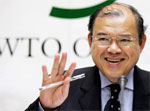 Supachai Panitchpakdi, director-general of the WTO, may not have the oratorical brilliance of Cobden but he does try. In what was effectively a valedictory speech to a public symposium which included heads of state and Jose Barosso, President of the European Commission, he reviewed the WTO's first decade since its 1995 founding in Marrakesh. The founding agreement gives the WTO aims as raising incomes, living standards and employment and expanding the production of trade in goods and services.
Supachi, with a Cobdenesque flourish, tells us that it is essential that we keep in mind the basic values and considerable achievements of the multilateral trading system:
First, the WTO, as the GATT before it, has extended the rule of law into the international trade realm and has contributed significantly to keeping peaceful and stable trading relations between WTO Members. This is, perhaps, its most crucial function...Trade is not the answer to all the world's problems, but it can make a powerful contribution to international efforts for development. We must ensure this contribution is realised and that the enormous potential of globalisation is harnessed for the benefit of people the world over.
He is right. The WTO has its failings, but we should not lose track in the minutiae of trade negotiations that the fundamental benefits of freer trade are peace and prosperity. A few years ago it seemed as if a newly nuclearised Pakistan might go to war with India. Today India and Pakistan are working on a free trade pact, having already opened up to more cross border transport and commerce. Intra-regional trade is booming, bringing in its wake peaceful prosperity. That is a prize more important than negotiating a few percent off tariffs at Doha. Egypt and Israel trade openly and welcome each others tourists, while Syria maintains a boycott. The former is at peace with its neighbour, the latter is not.
Free trade really does have the effect of drawing men together, thrusting aside the antagonisms of race, creeds and language to unite us in bonds of peace.