Prince Charles is right on British farming
By Alex Singleton | 15 September 2005
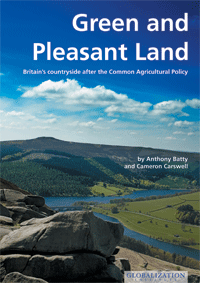 The Prince of Wales' vision of a countryside producing high-value, organic food is the right one, according to a new report published today by Globalisation Institute.
Green and Pleasant Land by Anthony Batty and Cameron Carswell says that the CAP - rather than being the saviour of the countryside - has been an environmental disaster, creating pollution with no economic benefit, and requiring more chemicals and energy use than had market forces been allowed to run. By encouraging the pre-emptive use of antibiotics, it threatens to create antibiotic-resistant diseases. It imposes costs on taxpayers, consumers, other industries and the environment - for benefits described as "trivial".
The abolition of the CAP should be twinned with a one-off payment to farmers to help them adapt. But while there will be less farming, it is a myth that the end of CAP will be the end of the countryside. There will still be a market for British produce, but in largely high-priced, non-intensive produce.
"The Prince of Wales has given us the vision of a countryside concentrating not on high output but on high quality, high value produce. This is a market in which the UK has considerable potential to compete after the CAP," say the authors.
The report also says the countryside will adapt to the end of the CAP by encouraging "eco-tourism", increasing local farm shops and encouraging city-dwellers to relax the countryside more often, bringing money into the countryside economy.
The CAP has led the countryside into a rut. Britain's countryside will be stronger, greener and more prosperous after its abolition. This report will reassure those in rural Britain who worry about the sustainability of their communities that they should welcome the future - not fight it.